Scanning and digitization as a turnkey service
When stacks of paper start taking over cabinets and important information is found "sometimes in some folder," it's a good moment to shift everyday life onto a lighter track. HelppoSkannaus is a clear scanning and digitization service, in which the work is handled ready for you: from picking up the material to organization, file naming, and delivery. The job is done safely, confidentially, and on a reasonable schedule, without unnecessary fuss.
For us, scanning is not just a button on a scanner. It's a controlled process, in which digitization is done for use. In other words, you get the files in such a form that they are easy to search, share, and archive.If you want to understand the differences clearly, read the article "What is the difference between scanning and digitization?"”.
Why scanning and digitization are worth doing now
Many postpone the project because "it takes time." The truth is that good scanning and smart digitization save time every week. When the material is in electronic form, it's found in seconds, and the same documents don't circulate in folders or emails multiple times. In addition, digitization reduces risks: paper can get lost, wet, or worn, but digital files can be backed up and secured.
Scanning also helps with the use of space. When archive cabinets become lighter, space is freed up for genuinely useful activity. At the same time, digitization supports responsibility: less paper is needed, and sharing documents doesn't require making copies. And best of all, scanning and digitization feel noticeable in everyday life immediately: when a document is found with a search word, work doesn't break down into "searching."
HelppoSkannaus's way of operating
HelppoSkannaus is a "turnkey" model. You don't have to think about the technology or work stages; instead, we agree on the content and proceed.
- We agree on the content and schedule. You tell us what you want for scanning and digitization, and how quickly.
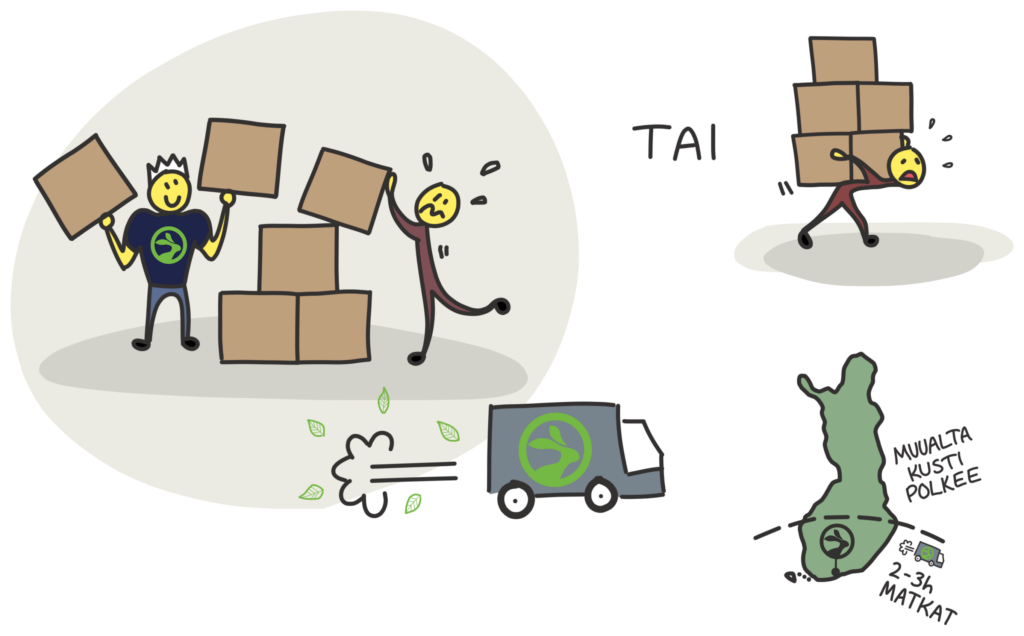
- Pickup or delivery. The material can be brought in yourself or pickup can be ordered. See the location as well as practical instructions for delivering the material.
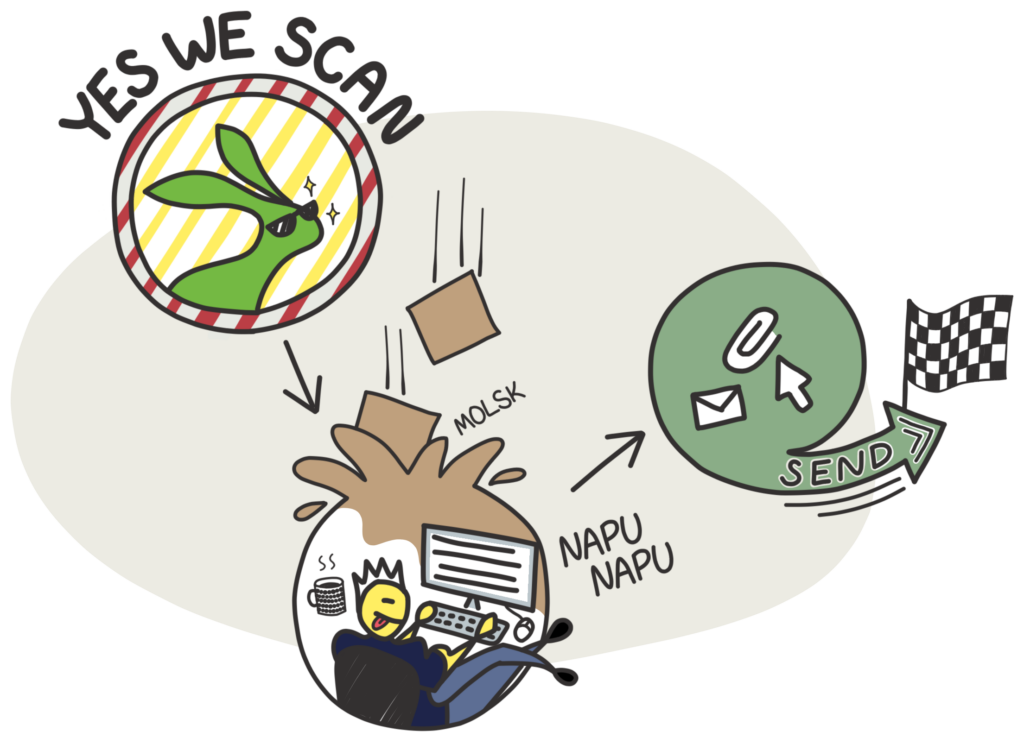
- Production. The scanning operator goes through the material, scanning is done at the agreed quality, and digitization is finalized with naming and, if necessary, text recognition.
- Delivery. You receive the files at the agreed place (e.g., to the cloud, a USB stick, or your system).
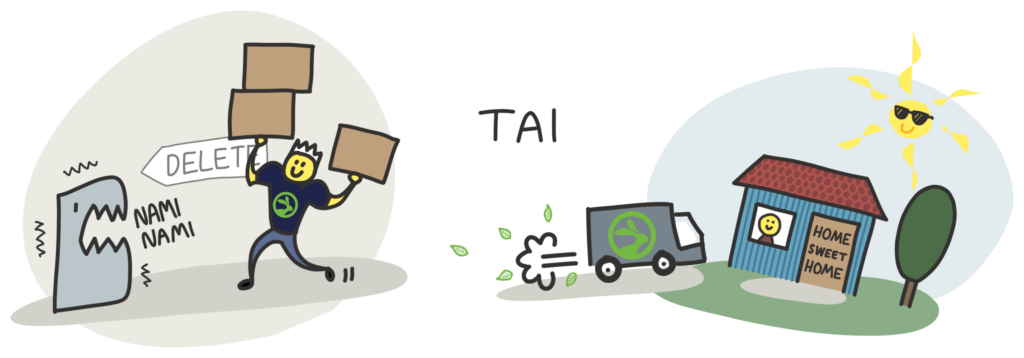
- Approval and final disposition. When everything is in order, the material is returned or disposed of as agreed.
When scanning and digitization are done this way, the end result is not "a pile of PDFs," but a clear digital material that serves you for a long time.
Scanning that suits both companies and private individuals
HelppoSkannaus does scanning and digitization work for both companies and private individuals. For companies, scanning often means clarifying archives, digitizing contracts and invoices, or making project materials electronic. For private individuals, scanning is often capturing memories: old photographs, letters, certificates, inheritance papers, diaries, or genealogical research materials.
When scanning is done carefully and digitization is designed for use, the end result serves in everyday life immediately. You get the material as clear files, with a sensible folder structure and an agreed naming logic, so that documents are found quickly and are easy to share onward. If necessary, digitization is made searchable with text recognition, so you find the right points in the content without browsing.
What all scanning can include
Scanning can be carried out in many ways depending on the material. If the material is already in folders, scanning can be done systematically from one folder to another. If the material is loose, digitization often begins with light sorting: staples, tape, and folds are removed, so that scanning goes smoothly and the end result is tidy. In large projects, scanning and digitization should be broken down into sensible batches, so that everyday life doesn't come to a standstill and you get files into use already during the project.
Typical materials for which scanning and digitization are suitable:
- contracts, minutes, bookkeeping, and personnel documents
- training materials, instructions, and manuals
- photographs, slides, and old paper pictures
- maps, posters, and technical drawings
- books and magazines (as needed)
If you're not sure which category your material belongs to, it doesn't matter. Just tell us what you have, and we'll suggest a suitable scanning and digitization method.
Digitization in practice: naming, OCR, and a sensible structure
Good digitization shows in the fact that the files are not named "scan001.pdf". With us, digitization includes an agreed naming logic and folder structure, so that the documents are found later without guessing. If necessary, we use OCR text recognition, whereby scanning becomes searchable: you can search for words, numbers, and addresses from the content of the file.
Digitization can also include light image processing, such as straightening and contrast adjustment. This way scanning produces clear files also from older material. Many are surprised at how much better old material looks when digitization is done carefully.
Get to know the digitization service and examples..
Large-format images, drawings, and maps: when ordinary scanning is not enough
A2, A1, and A0-sized documents require their own equipment and expertise. That's why we have a separate large-format scanning, in which scanning is done with equipment suitable for the large size and digitization is finalized to the agreed format. We have renewed our equipment, and this shows in practice a more precise output as well as a better end result, especially in large-format images, where lines, text, and small details must be captured without compromise. This is especially useful for architects, engineering offices, housing companies, and real estate investors, for whom the findability of drawings is a core matter of everyday life.
HELPPO packages: ready-made entities that get you moving quickly
If you want to buy a complete package "all at once," the HELPPO packages are made precisely for that. The packages include scanning, digitization, and naming according to an agreed model, and the whole is easy to budget.
EASY Archive Scanning package is suitable for folders, contracts, and archives.
EASY Large-Format Scanning package is designed for A2–A0-sized documents and larger.
EASY Property Management Scanning package combines archives and large-format images and brings along everyday findability.
Property management: digitization that really serves in everyday life
Documentation related to properties grows year after year: minutes, service books, contracts, drawings, and reports. When scanning and digitization are done properly at once, information is found quickly and the same document doesn't disappear "into someone's email." In the property management package, digitization often also includes OCR, whereby the documents are searchable. This saves time especially when information is needed quickly, for example in connection with damage, renovation, or a tendering process.
Scanning and digitization with data security first
When archives, contracts, or personal memories are being handled, trust is the foundation of everything. That's why we do scanning in a controlled manner and take care that the material stays in the agreed chain throughout the entire process. Digitization is always delivered in the agreed way, and at the same time we ensure that the files are clearly named and easy to manage also for further use.
In practice, this means clear ground rules right from the start: we agree on the handover, handling, and return of the material, and we make sure that the material doesn't "wander" from stage to stage. If necessary, we can also agree on how the completed files are delivered securely and how the original material is returned to you. If there is no longer a need for the material after the project, we can also handle the disposal according to the agreed practice, once the work has been approved.
This is important especially when the material contains personal data, financial material, or other confidential documents. When scanning and digitization are done with data security first, you get, in addition to the end result, also peace of mind that your material has been in the right hands the whole time.
File formats and delivery: how digitization is handed over
Digitization is delivered in the agreed way: typically as PDF files, sometimes also as images or other formats depending on the project. Scanning can be produced both as an "archive-quality" version and as a lighter version that is easy to send or download. If the goal is searchability, OCR is often the most sensible addition, because it makes digitization genuinely findable.
Delivery can be done, for example:
- as an electronic delivery to the agreed place
- saved onto a USB stick or hard drive
- into a system or cloud service, if this is part of the project
The most important thing is that digitization suits your everyday life. If you don't want to think about the technical details, it's enough that you tell us where you want the files to be and how they are used.
For whom this is especially useful
Scanning and digitization are suitable for almost everyone, but a few situations recur continuously:
- Moving or renovation: papers out of drawers, scanning saved, space at home.
- Cleaning up archives: the company's folders into electronic form, digitization so that information is found.
- Property and housing company documents: drawings, minutes, and contracts in the same place.
- Rescuing photographs: albums and loose pictures into the digitization and scanning process before they fade.
- Project work: large-format images and plans into digitization form, so that they can be shared.
This is how you request a quote without complexity
Requesting a quote is easy when you tell us three things:
- what material there is (folders, loose papers, photos, large-format)
- how much of it there is (an estimate is enough)
- in what form you want the digitization (PDF, searchability, naming)
After that, we suggest a suitable scanning and digitization method and tell you how the project proceeds. The easiest start is often the HELPPO package, but we also do tailored packages.
Small and large projects: the same principle, different rhythm
Not all projects are a "ten-folder job." Sometimes scanning concerns a single folder's worth, sometimes an entire warehouse wall. With us, scanning and digitization scale. In small packages, you often reach the finish line quickly, and you get the digitization into use within the same week. In larger projects, a clear rhythm is agreed upon: for example, scanning is done in batches, digitization is delivered in stages, and you have visibility the whole time into where things stand.
For companies, this is often the best model, because operations can continue normally. When scanning and digitization progress systematically, internal information management also stays tidy, and an "electronic archive" doesn't emerge from chaos.
Quality and precision: what's worth asking for
Good scanning looks tidy, but the most important thing is the purpose of use. For archiving and retention required by legislation, digitization is done so that the content remains readable for a long time. If the scanning is intended to be printed or used for close inspection (for example, with drawings), the precision and settings are chosen accordingly. We help in choosing a sensible level, so that digitization isn't unnecessarily "too heavy," but also not too light.
Tips before you send material for scanning
If you want, you can get the project moving really easily with these:
- Gather the material in one place and estimate the quantity ("about 3 boxes" is enough).
- If there's a clear order in the folders, keep it. Scanning and digitization can be done following the same logic.
- Mark any "special" documents (e.g., double-sided, fragile, or odd-sized), so that scanning is done correctly for sure.
- Think about whether you want searchability. OCR makes digitization more quickly findable.
HelppoSkannaus's way of doing scanning and digitization
HelppoSkannaus does scanning and digitization so that you actually get the files into use. When scanning is of high quality and digitization is sensibly constructed, everyday life becomes easier: information is found, space is freed up, and important content is preserved. If you want to get started as easily as possible, tell us what material you have and how much of it there is. We'll suggest a suitable package, agree on a schedule, and handle the scanning and digitization ready for you. If you wish, you can also choose a ready-made HELPPO package, in which case the entire project proceeds with a clear model without unnecessary intermediate steps.
When the project is complete, you have a clear folder structure and the information is found with a single search. And if more material comes later, the same scanning and digitization model can be easily repeated. This way the whole stays manageable also in a growing everyday life, year after year.
Welcome to getting the scanning and digitization taken care of all at once.